

Farm Finance
What is the best way to finance a tractor in New Zealand?
Dealer deals, your bank, or a broker comparing specialist lenders. How each route to tractor finance works in New Zealand, and the four lines to check on any offer.
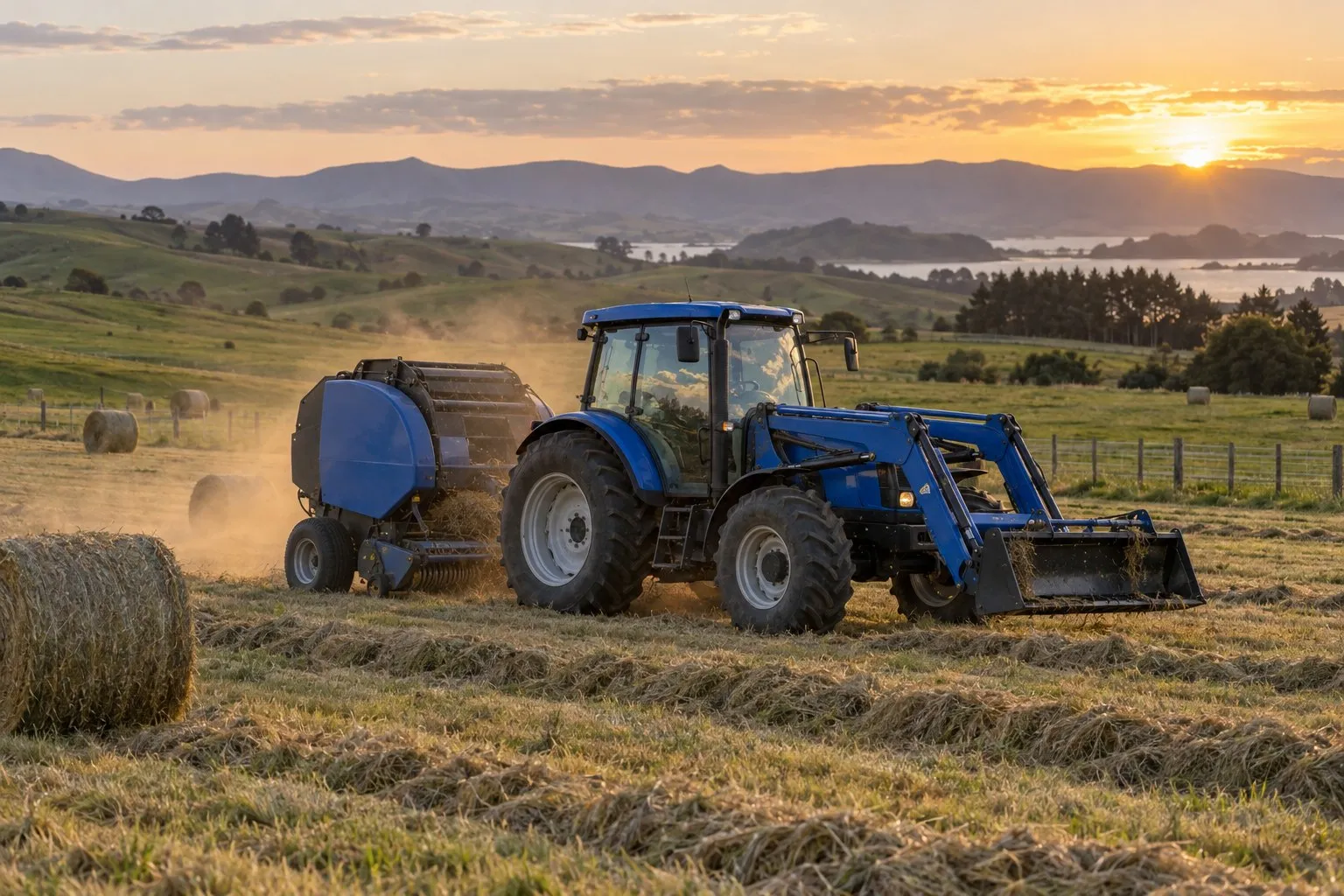
There are three common ways to finance a tractor in New Zealand: the finance offered by the dealer or manufacturer, your own bank, or a broker who compares specialist lenders for you. None of them is always the best. The right one depends on whether the tractor is new or used, how your farm lending is already set up, and how your income looks on paper.
Route 1: dealer and manufacturer finance
Most tractor brands sold in New Zealand have a finance arm or a lender they work with, and the dealer will offer it at the point of sale. On a new machine during a promotion, these deals can be very sharp.
What to watch:
- The offer is usually tied to that brand, and often to a specific model or a short term.
- Promotional rates often come with conditions, such as a minimum deposit or a set term. Read the conditions, not just the headline rate.
- Used tractors are less likely to come with a promotional deal.
Route 2: your bank
If you already bank your farm with one of the big lenders, they may be happy to add a tractor to your facilities. That can be simple, but it can also tie the machine into your wider farm lending, and the bank will usually want to look at the whole business again.
Route 3: a broker
A broker takes one application to several specialist lenders and comes back with the options that actually fit. A broker is worth a call when:
- the tractor is used, or you are buying privately
- you want the loan kept separate from your farm mortgage
- your income is seasonal or does not fit a standard form
- you want something independent to compare against the dealer offer
If the dealer offer turns out to be the best one available, a good broker will tell you to take it.
The four lines to check on any tractor finance offer
Whichever route you take, four lines tell you most of what you need to know:
- The interest rate. Not just the repayment. A low repayment can hide a long term.
- The fees. Establishment fees, account fees and any early repayment costs.
- The term. A longer term lowers each payment but means more interest overall.
- The total you repay. The single number that shows the real cost of the loan.
Put two offers side by side on those four lines and the better deal is usually obvious.
What lenders look at
For a farming business, lenders usually want to see business bank statements and your latest financial statements or IR3. They will also look at the machine itself: its age, condition and how easily it could be resold. There is no blanket age limit; every machine is assessed case by case, which is where comparing more than one lender helps.
What if my income is seasonal?
Seasonal income can be assessed, using your bank statements and financial statements across the year. The loan itself has regular repayments, so the question is whether those repayments sit comfortably in your quiet months as well as the good ones.
Next step
If you are looking at a tractor, send us the make, model, year and price, or the dealer quote you already have. Tyler will tell you how it compares across our panel, usually within one business day. Enquiring has no impact on your credit score.
Ready when you are.
Sixty seconds. No impact on your credit score. No commitment. Tyler will be in touch fast, usually the same day.